
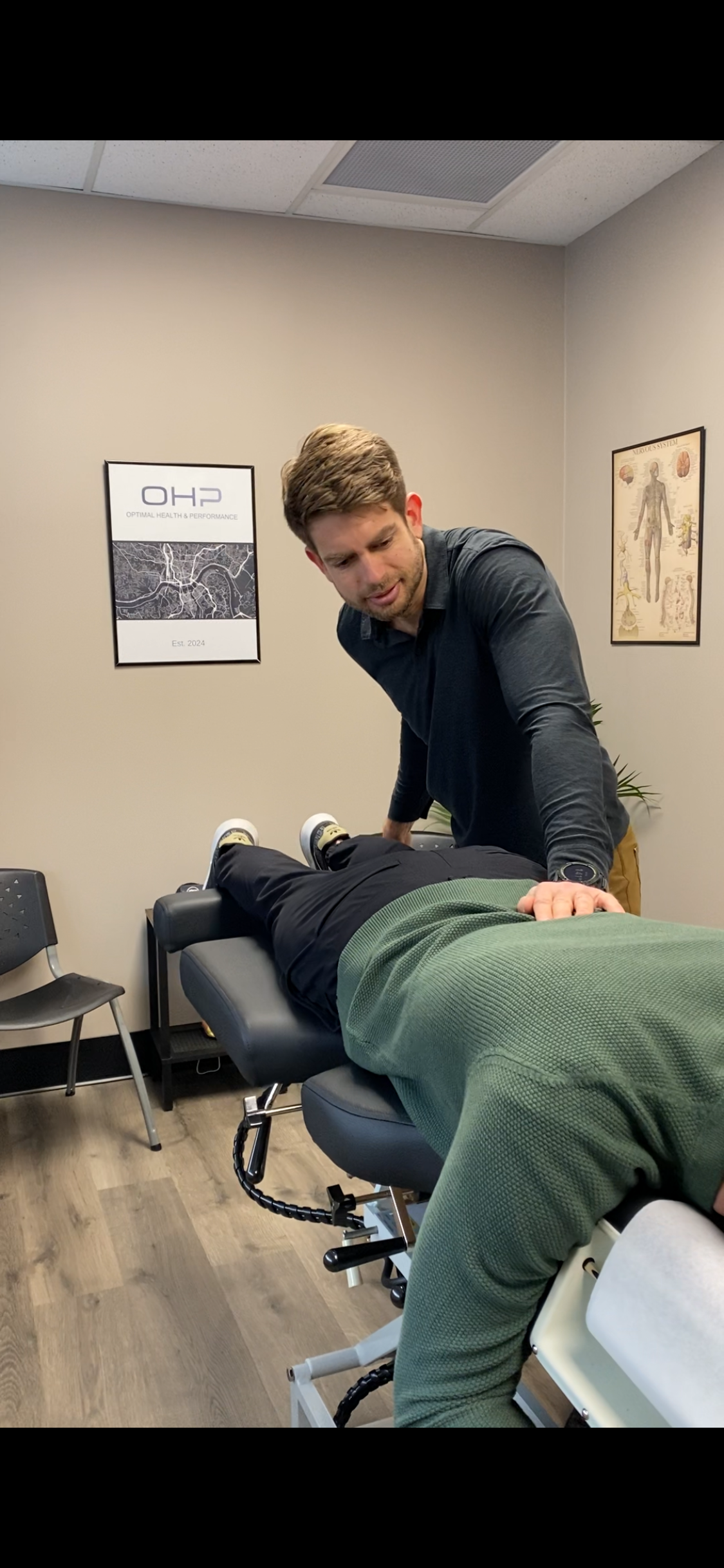
Back Pain & Sciatica Treatment in Cincinnati
Back pain doesn't have to mean time off the bar or off the road. We find what's actually driving it and build a plan that keeps you moving.
Why Does My Back Keep Hurting?
Back pain is the most common complaint we see — and the most overtreated. Most people are told to rest, avoid lifting, and wait it out. Some are handed a sheet of generic stretches. Others end up chasing MRI findings that may have nothing to do with why they're actually in pain.
The result? The pain fades, they go back to training, and it comes right back.
Back pain that keeps recurring isn't bad luck. It's a signal that something in how you move hasn't been addressed. That's where we start.
Is It Your Back — Or Something Else?
The lumbar spine rarely fails in isolation. In active people, recurring back pain is often driven by:
Limited hip mobility forcing the lower back to compensate
Weak or poorly coordinated glutes and core
Stiff thoracic spine changing how load is distributed
Poor movement patterns under load (deadlifts, squats, running gait)
Treating only the back without addressing these factors is why so many people get temporary relief and nothing more.
If your low back tightens up every afternoon, the problem isn't that you sit — it's what sitting does to your hips. Here's why.
Sciatic pain down your leg could be coming from a disc, a nerve root, or a muscle in your glute — and each one needs completely different treatment. Here's how to tell them apart.
Common Back & Sciatica Conditions We Treat
Low back pain and muscle guarding
Disc irritation and disc herniations
Sciatica and nerve-related leg pain
SI joint dysfunction
Facet joint irritation
Recurring back tightness with lifting or running
Back pain that flares up after long periods of sitting
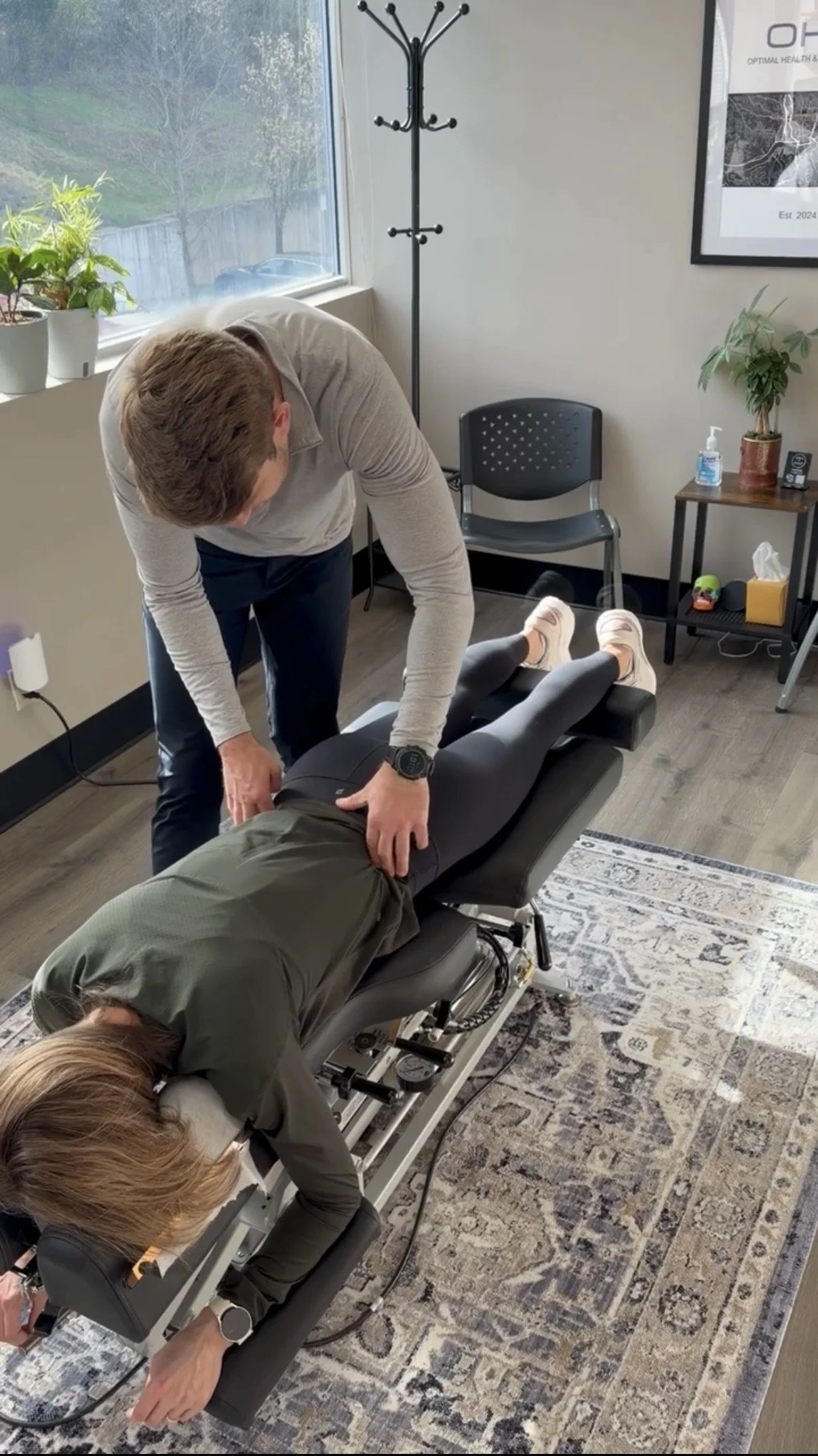
What Is Sciatica?
Sciatica refers to pain, numbness, or tingling that travels from the low back down through the glute and into the leg — sometimes all the way to the foot. It's caused by irritation or compression of the sciatic nerve, most commonly from a disc, tight piriformis, or joint dysfunction in the lumbar spine or pelvis.
It's very treatable. But it does require identifying where the nerve is being irritated and why — not just treating the symptoms.
How We Treat It
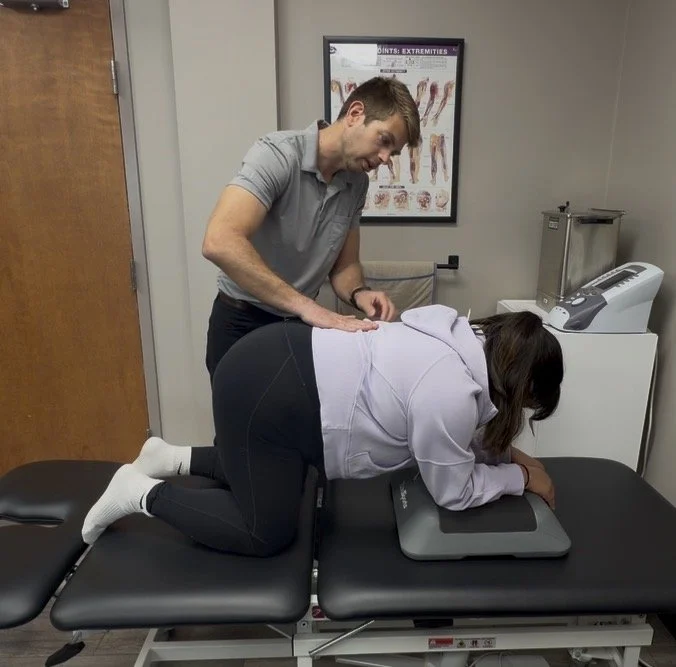
Your first visit starts with a full movement assessment to understand how your spine, hips, and pelvis are working together. From there, treatment is built around what your body actually needs.
Treatment typically combines:
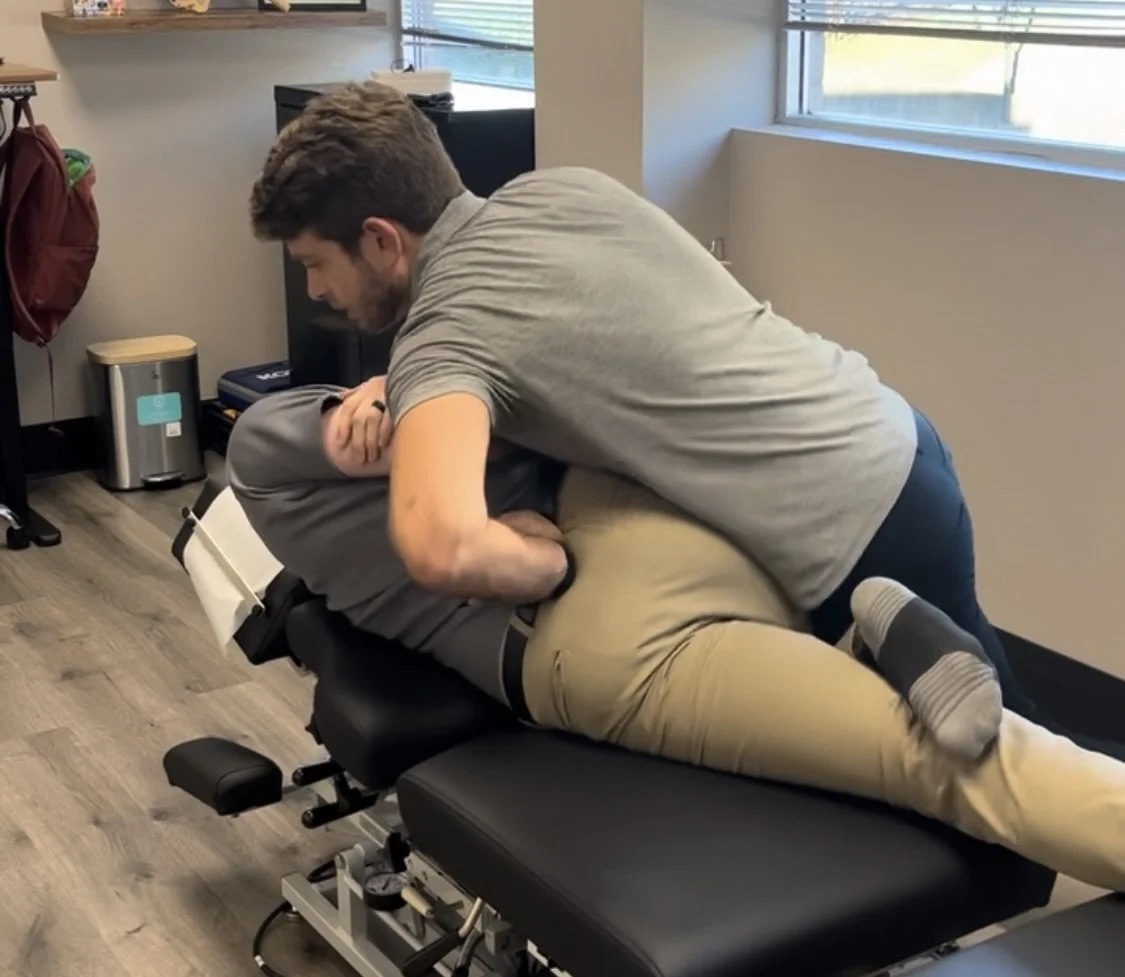
Chiropractic care to restore joint mobility in the lumbar spine, pelvis, and hips
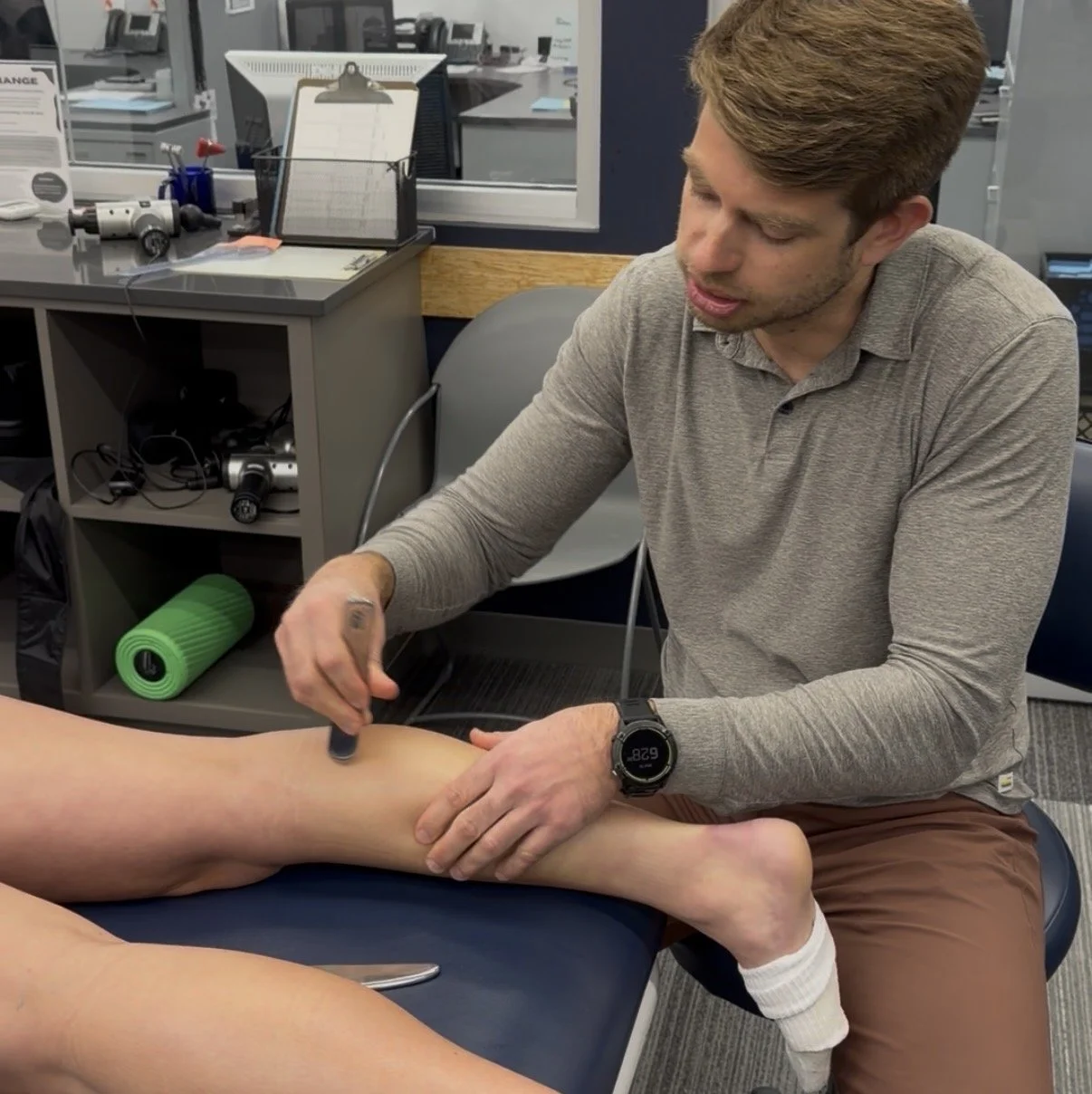
Active Release Technique (ART) to address soft tissue restrictions contributing to nerve irritation or movement compensation
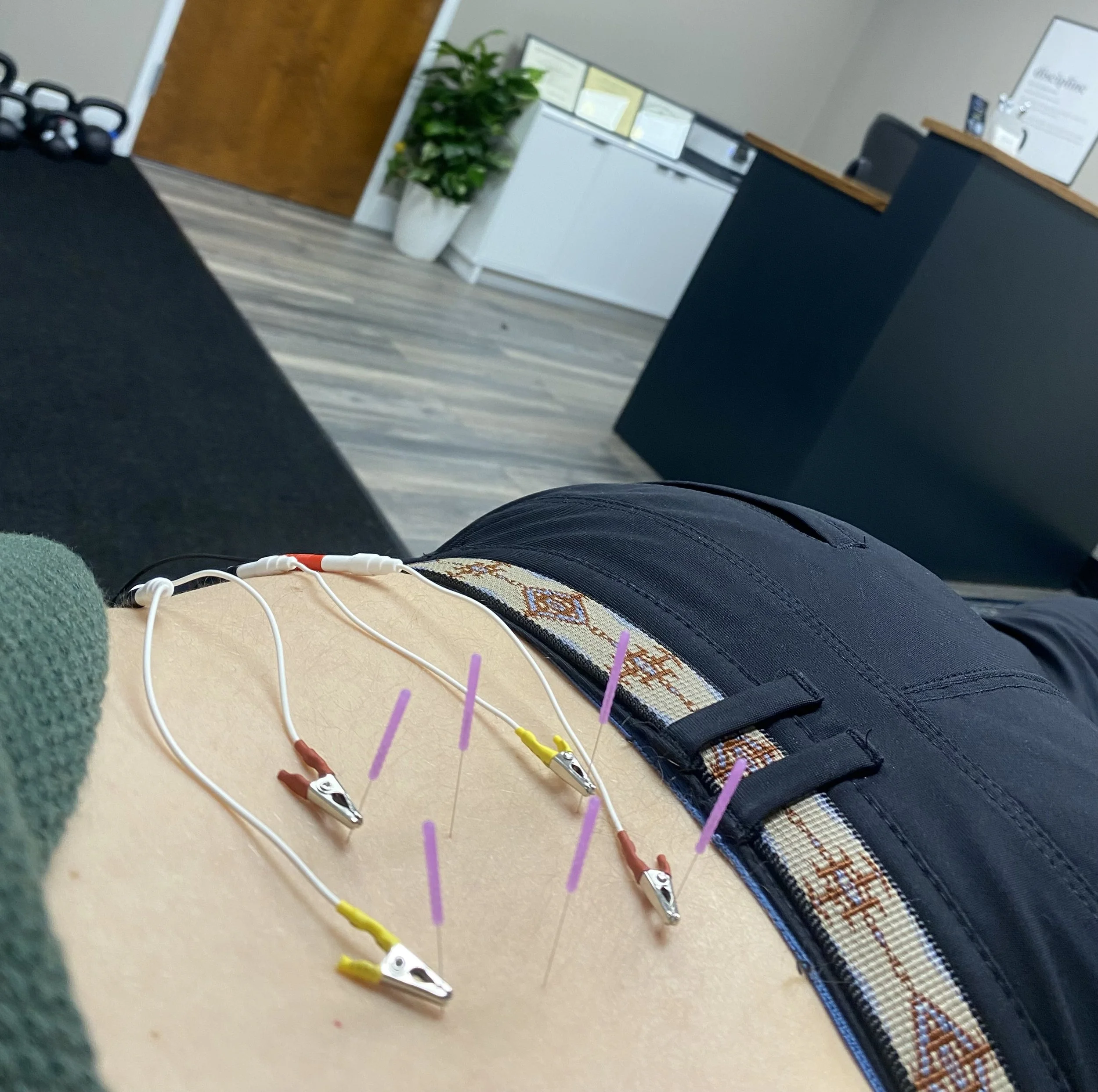
Dry needling to reduce deep muscular tension and guarding in the low back and glutes
Rehab & movement retraining to correct the underlying patterns driving the problem — so it doesn't keep coming back
You Don't Have to Stop Training
One of the most common things we hear is "my last provider told me to just stop lifting" or "I was told to take six weeks off running." That's rarely necessary and often counterproductive.
We work with your training — modifying where needed, loading intelligently, and keeping you as active as possible throughout the recovery process. The goal is to fix the problem without derailing your progress.
Back pain that keeps coming back is telling you something.
Schedule a free 15-minute discovery call to find out what's actually going on and whether we're the right fit.
FAQs
Why does my back pain keep coming back?
1
Recurring back pain usually means the root cause hasn't been addressed — often a movement or mobility issue rather than the back itself. Rest provides temporary relief, but without correcting the underlying pattern, the pain returns when you go back to activity.
Can I keep lifting or running while being treated?
2
In most cases, yes. We rarely recommend stopping training altogether. We'll modify what needs to be modified and keep you as active as possible while the issue resolves.
Is sciatica serious?
3
Sciatica can range from mildly annoying to significantly limiting, but it's very treatable in most cases. The key is identifying where the nerve is being irritated and addressing it directly rather than just managing symptoms.
Do I need an MRI before coming in?
4
No. We perform our own movement-based assessment to identify what's driving the problem. Imaging can be helpful in some cases but is rarely necessary to start treatment.