
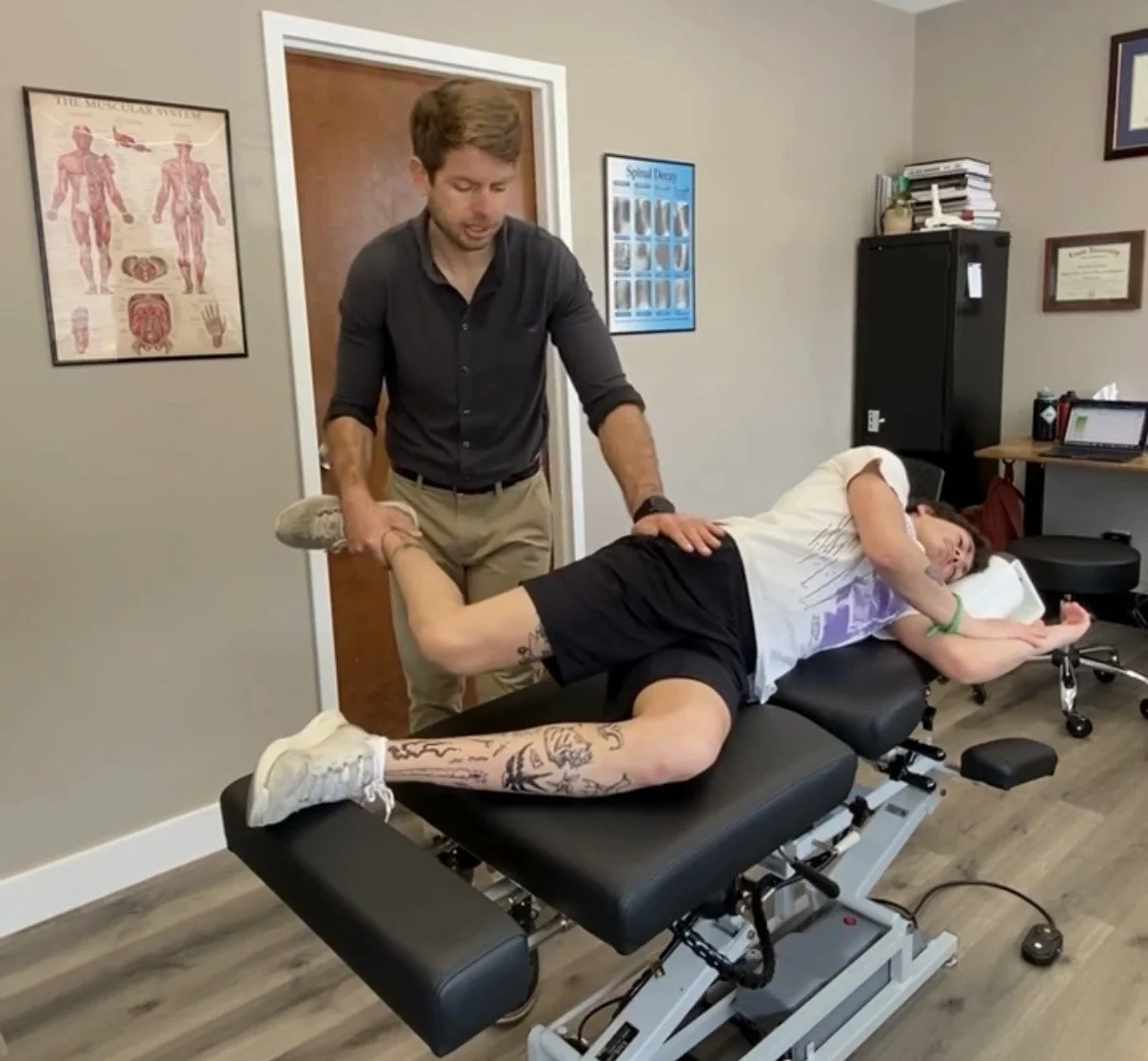
Hip Pain Treatment in Cincinnati
The hip sits at the center of almost every movement you make. When it's restricted or not working properly, everything else pays the price — your knees, your back, and your performance.
The Hip Is the Center of Everything
In running, the hip drives propulsion. In lifting, it determines how load is distributed through the spine and knees. In both, a hip that lacks mobility or stability quietly forces compensation patterns that show up as pain somewhere else — often the low back or knee — before the hip itself becomes symptomatic.
By the time hip pain shows up, it's usually been building for a while.
The good news is that the hip responds extremely well to treatment when assessed and addressed correctly. Most hip issues we see — even ones that have been lingering for months — resolve with the right combination of mobility work, soft tissue treatment, and targeted strengthening.
Hamstring tightness that won't resolve with stretching is often a hip stability problem in disguise. Here's why.
What's Actually Driving Hip Pain?
Hip pain in active people is rarely just a tight hip flexor. Common drivers include:
Restricted hip mobility in flexion, extension, or rotation
Poor glute activation and stability under load
Labral irritation from repetitive loading patterns
Compensation from ankle or thoracic spine restrictions
Overuse from training volume without adequate recovery
Sitting for long periods compressing the anterior hip structures
Understanding which of these is driving the problem is what separates a plan that works from one that doesn't.
Common Hip Conditions We Treat
Hip flexor strains and tightness
Glute and piriformis irritation
Hip impingement (FAI)
Labral irritation
Greater trochanteric bursitis
SI joint dysfunction
Hip mobility restrictions limiting squat depth or running stride
Groin strains and adductor tightness
How We Treat It
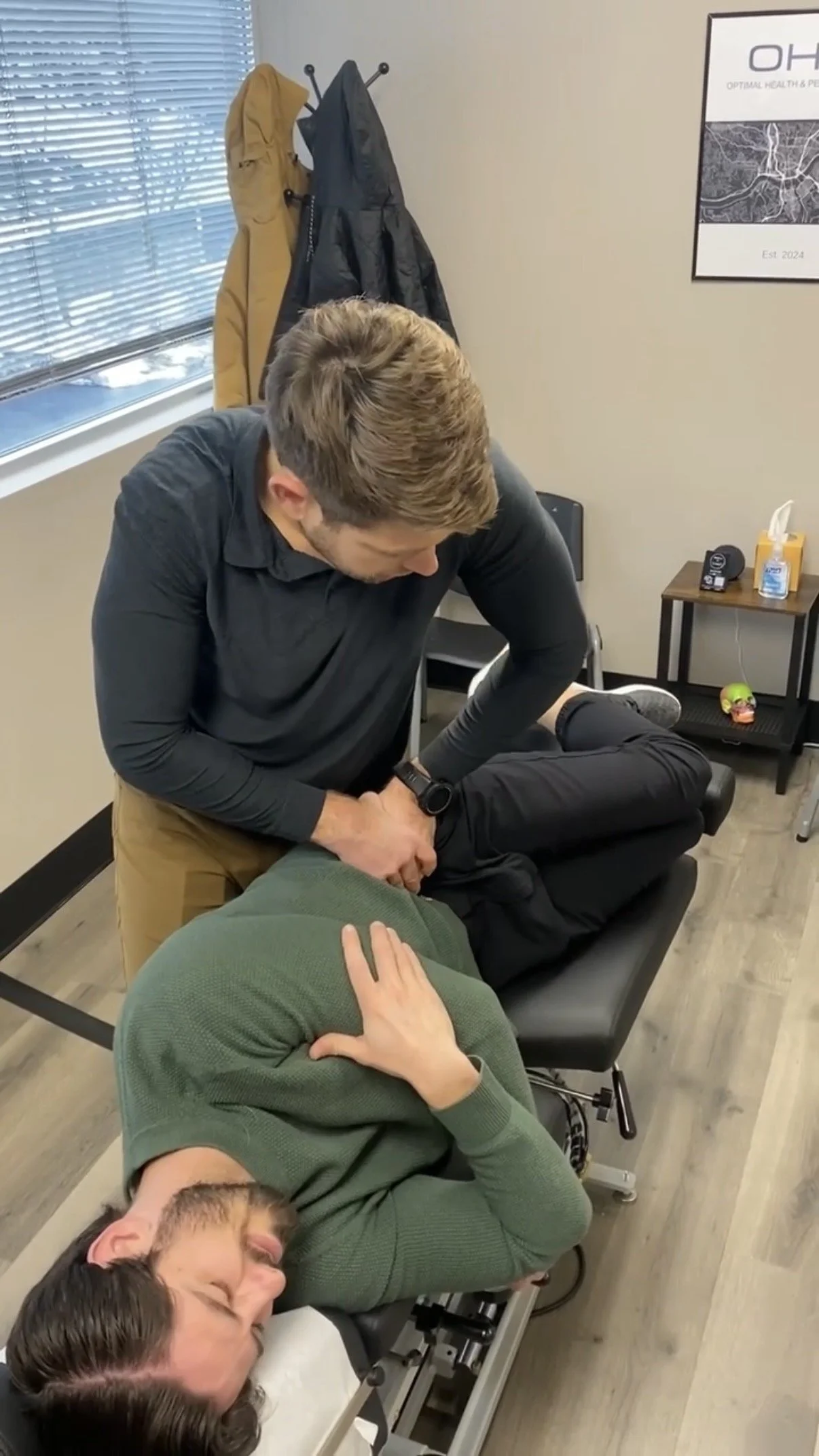
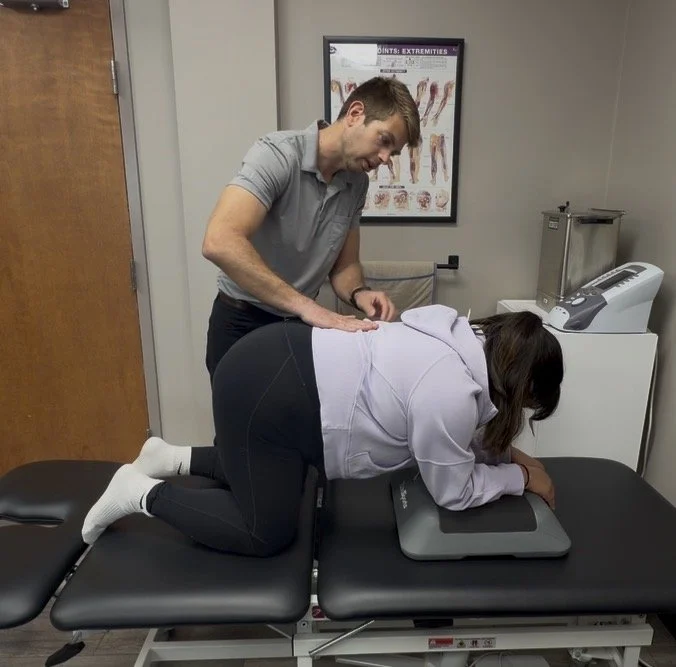
Your first visit includes a full movement assessment of the hip, pelvis, lumbar spine, and lower extremity — because none of these work in isolation. Treatment is built around what's actually restricting your movement and driving your symptoms.
Treatment typically combines:
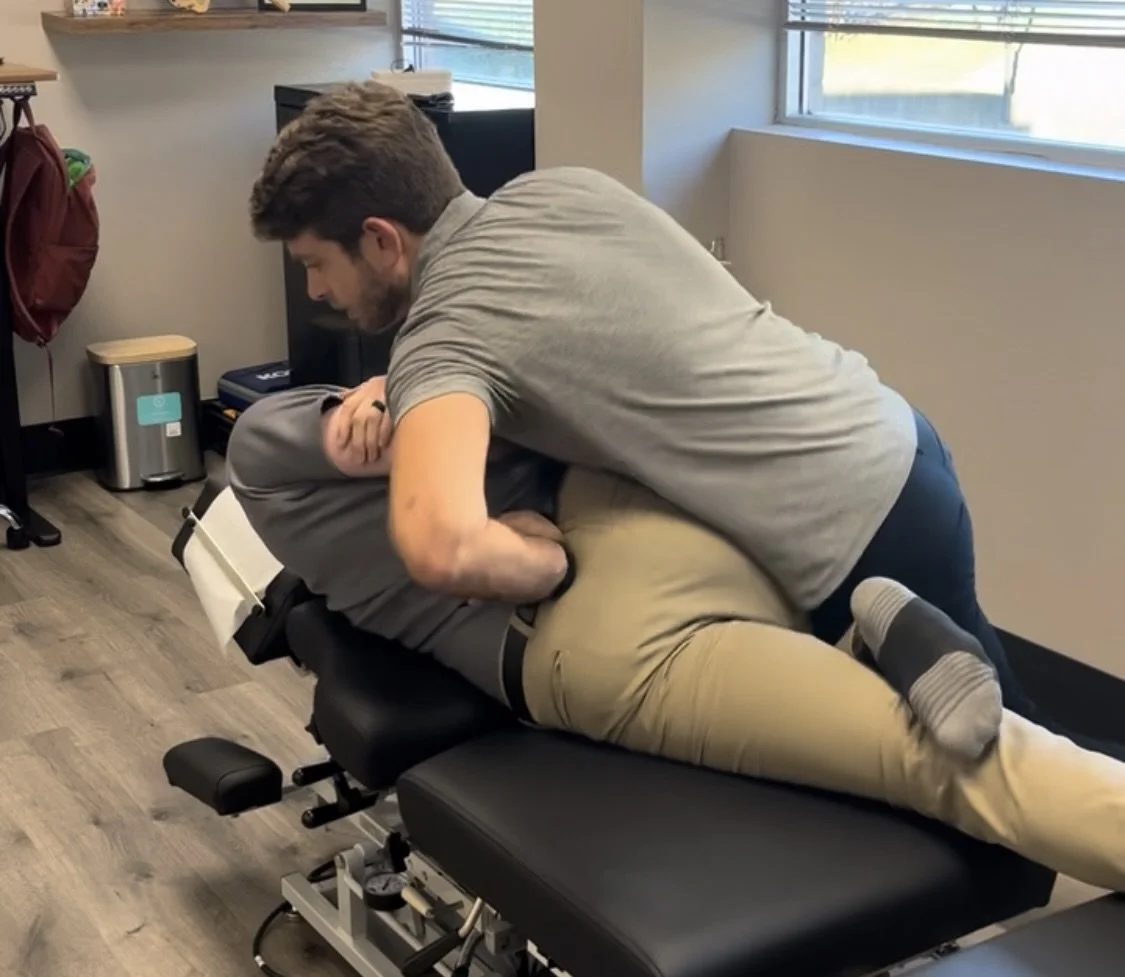
Chiropractic care to restore joint mobility in the hip, pelvis, and lumbar spine
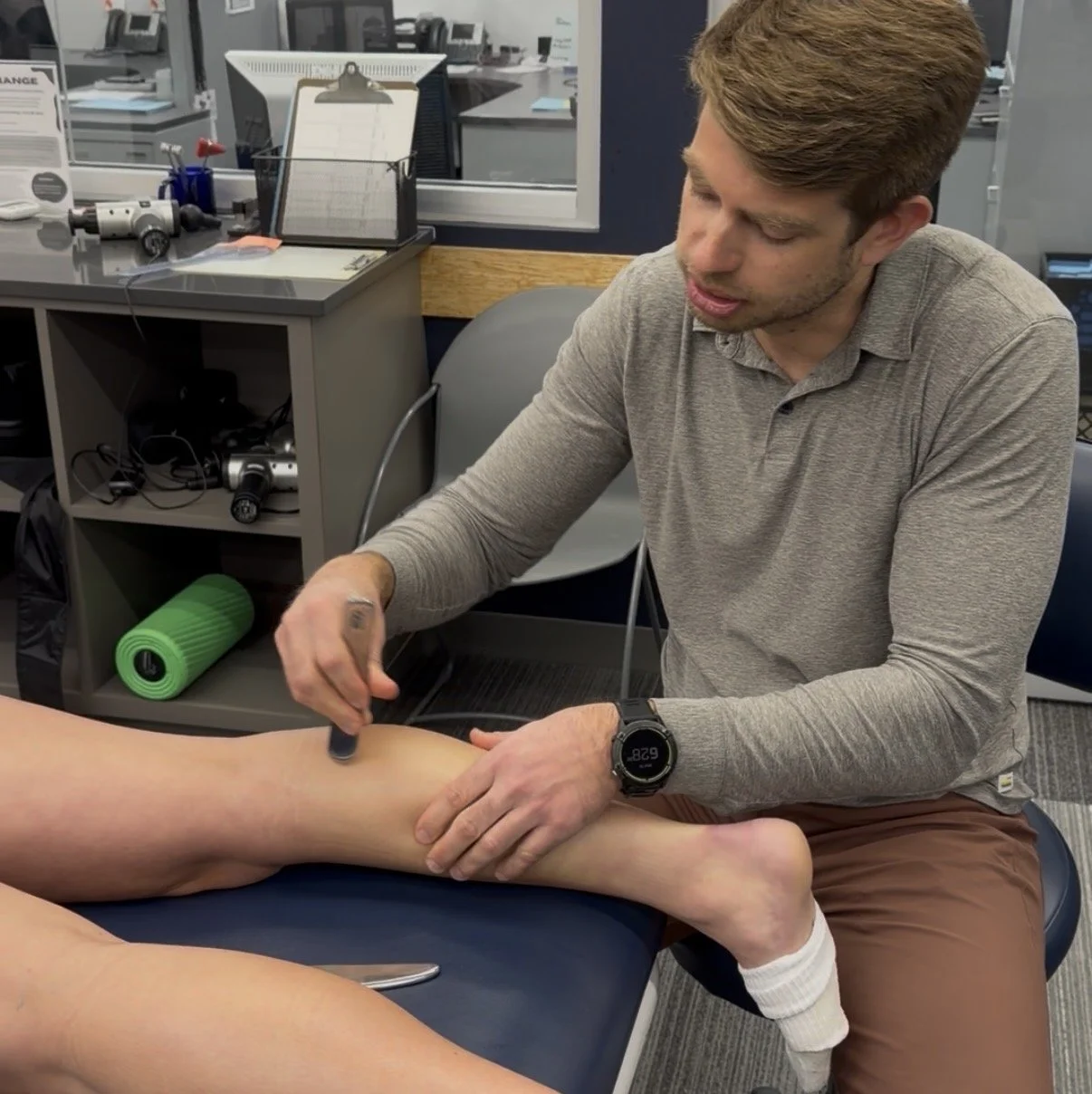
Active Release Technique (ART) to address soft tissue restrictions in the hip flexors, glutes, piriformis, and adductors
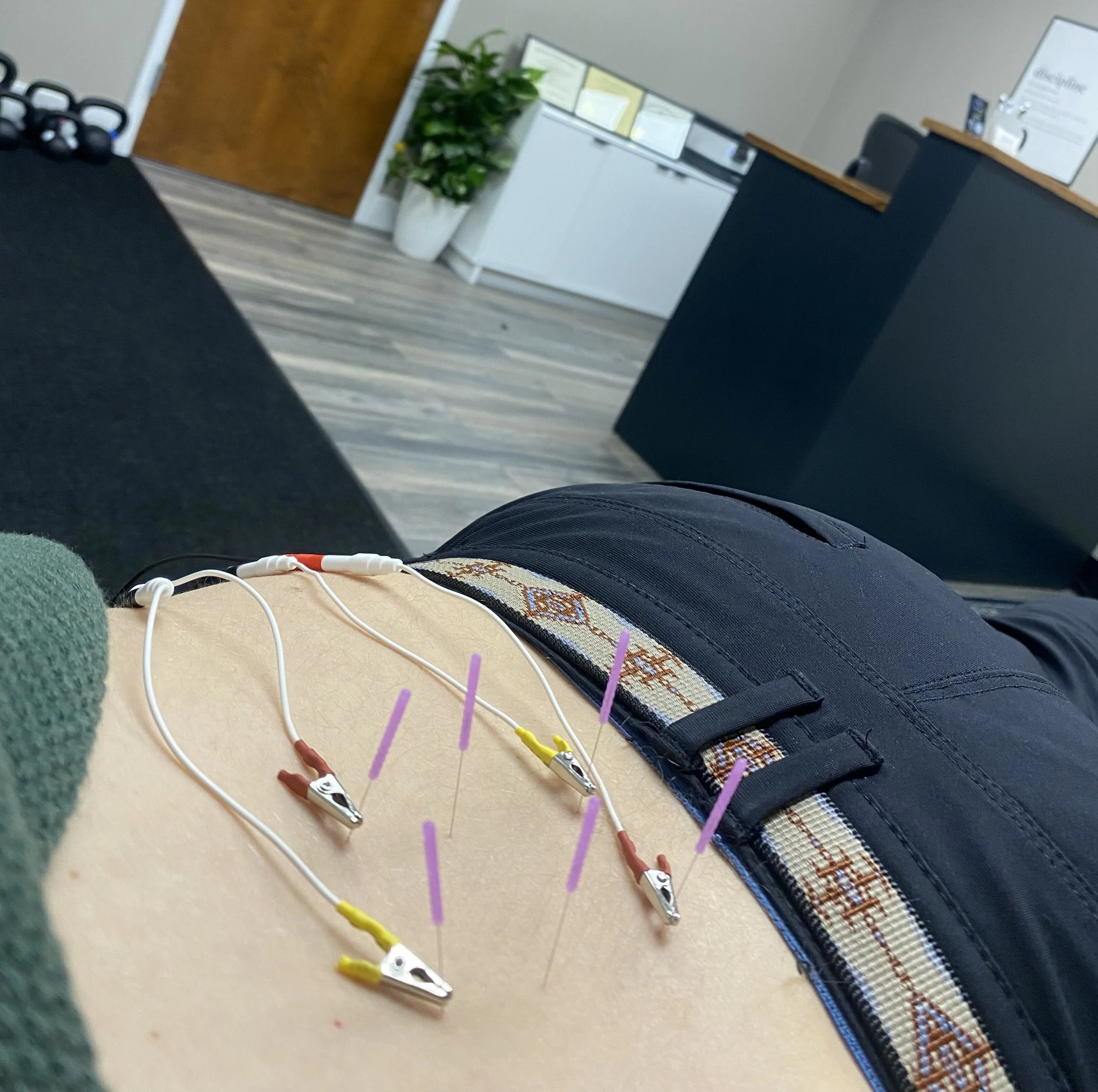
Dry needling to reduce deep muscular tension and trigger points contributing to pain and movement dysfunction
Rehab & loading strategies to rebuild hip stability, glute function, and movement quality so the hip holds up under training demands
A Hip That Works Changes Everything
When the hip moves the way it should, the back stops compensating. The knees stop absorbing excess load. Running feels easier. Squats feel better. The whole kinetic chain functions more efficiently.
Fixing your hip often fixes more than just your hip — and that's exactly the point.
Hip pain that's been lingering is worth getting assessed.
Schedule a free 15-minute discovery call to talk through what's going on and find out if we're the right fit.
FAQs
Can hip pain cause knee or back pain?
1
Yes — frequently. A restricted or poorly functioning hip forces the low back and knee to compensate during movement. It's one of the most common reasons people have recurring back or knee pain that doesn't fully resolve with treatment focused only on those areas.
Do I need an X-ray or MRI before coming in?
2
Not to start. A movement-based assessment gives us a clear picture of what's driving the problem. Imaging can be helpful in specific cases but isn't required upfront.
Can I keep training with hip pain?
3
In most cases yes. We'll identify which movements are aggravating the issue and modify accordingly while the underlying cause is being addressed.
How long does hip treatment take?
4
It varies depending on how long the issue has been present and how much mobility and stability work is involved. Most patients notice meaningful improvement within a few visits once the root cause is identified.